

Jiminy Cricket. A Gift and a Curse in Safety Planning.

Safety Planning. Starts. Lands. Finishes. In the Middle Column.
On a recent workshop in Europe, working on safety planning and the role of the
middle column, I posed the question to the group “What is most challenging for you,
when you have serious worries for children, and I say to you we need to get into the
middle column?”
One of the answers came from a very considered and intelligent practitioner who has vast experience of working closely with the judicial system. His answer (I’m
paraphrasing from memory) was, ‘because the judge will ask us for all the risks/
dangers – so this is where we feel we must focus, to answer the questions of the
judge’.
Fair point. And, I find the question of the judge so curious.
Surely, in the face of very real danger, big worries that accompany serious harm the most pressing question the judge wants answered is ‘where is the safety for this
child?’ ‘Who is helping keep the child safe?’ ‘How are they doing that?’ He would ask for lots of detail on that.
Surely?
It does seem obvious (at least to me) that when we are scared it makes more sense, once we establish the danger, that we are looking for the safety. Either and both, existing and how to get to it. Rather than endlessly looking for more and more detail of the danger.
But this is not naturally how the human brain works.
We know that to focus on positives ~ the good, the safe ~ as a cognitive function is
more complex for human beings. It’s more difficult for our brains to think this way.
We are after all, all about survival. It’s how we are wired, to see downside risk. We
also know that as research identified in the book, The Power of Bad (by John Tierney & Roy F. Baumeister) teaches us for any one negative aspect it takes four
equivalent positives to balance that one negative.
That’s a lot of work for our brains. Fear is powerful.
Let’s make this personal for a moment, away from child protection.
I was asked by a friend the other morning “do you get scared when you’re running in different cities around the world?”
As I pondered this (I don’t very often get scared FYI) I tried to unpack my thinking.
Am I scared?
No. Not usually. Sometimes. What’s my process for thinking through where/ when /
and how I run in a random city?
And turns out, I make a balanced assessment of the given situation.
What are the dangers? Okay. Now what does safety look like for me?
Like this:
Is it light enough?
Can I use my phone (not everywhere…thanks for nothing Telstra!)?
Who /will anyone come looking if I don’t turn up somewhere later this morning?
Where, on a scale of dangerous AF to safe as houses, would this particular part of
this particular city rate for my run safety?
Who says? Why?
If I asked some of the local social workers, I’m working with where would they rate it?
What about the ones who also run in the mornings?
Where would they tell me to run that is safer?
What is it that makes it safer there? Etc etc.
If there is some danger – what exactly is it?
Is it grounded in actual past harm or threat for a female runner? How reliable are the sources giving me the information? (i.e., what evidence is there for that?)
And then…. where/ when/ is there the safety to make it possible for me to go running and not be attacked ..or worse…( worst fears and all… )
Importantly I need a plan, for if there is some immediate danger - what will I do? Who might be able help me? What would I need them to do so I am safe, or I can get myself safe again quickly.
On reflection, I explicitly go through some versions of this in every new location I am in. Unless I have been there lots and am familiar with the track and the (dare I say it) existing strengths and existing safety. I take in information and advice, make some analysis of it and land on my judgement of the level of my own safety for my
upcoming run.
Back to CP.
I will often say that one of the key questions all child protection practitioners and
leaders need to ask is, ‘What has been the harm to the child?’ At any stage of the
analysis process practitioners should be able to answer this question. Whether the
case is a new referral or within the safety planning process looking at whether to
reunite a child with their family or anywhere within the workflow continuum. We
should work hard so that both referrers, other professionals and families know that
we will ask them this question. To equip them to be able to figure out their answer to
that question, to do that analysis, we must have done our own analysis.
And we must continue to do it at every stage of an open case.
We should also - just as importantly - be able to respond to the question, ‘tell me
what is keeping this child safe?’ ‘What are the all the ways we know that the child is
safe?’. Regardless of harm type, chronicity, severity, impact and complicating
factors.
If we are worried about children, we need to articulate what we think we know and
see. We have a responsibility to not only be able to explicitly articulate harm and
danger (let’s face it, this is our wheelhouse) we equally and in end more importantly, if we are ever to get out of the case having a grounded notion that the children are safe, need to be able to clearly articulate what is keeping them safe from expressed that danger right now?
Are you with me? You are. I know you are. Which column am I in? I am comfortably, confidently, unapologetically, in the middle column! #middlecolumnbitches
Where does safety planning start, land and finish?
If you said “the middle column” go straight to the top of the class, collect your $200
and your chocolate frog, take a bow, give me a high five mate!
Building safety always starts with a forensic compassionate intelligent inquiry
exploring existing safety and strengths with the children, the parents and everyone
who has natural connections to the children and parents. If we can’t articulate all of
the safety that already exists – what exactly are we doing to increase safety to an
acceptable level right now???
Its likely we’re making up a safety plan on our own inhouse professional terms. That
list of ‘thou shalt and thou shalt nots’ as my colleague and friend Rosina Harvey-
Keeping calls them.
In vernacular terms and to make the point clearly ‘we’re probably making shit up’.
This happens mostly because we don’t have vision for safety planning in a different
way to the making of lists of rules. So, we revert to case practice as usual – telling
people what to do. Newsflash (not really a newsflash) this doesn’t work!
Seriously though, I know it isn’t easy, I know it can feel wrong to talk about safety
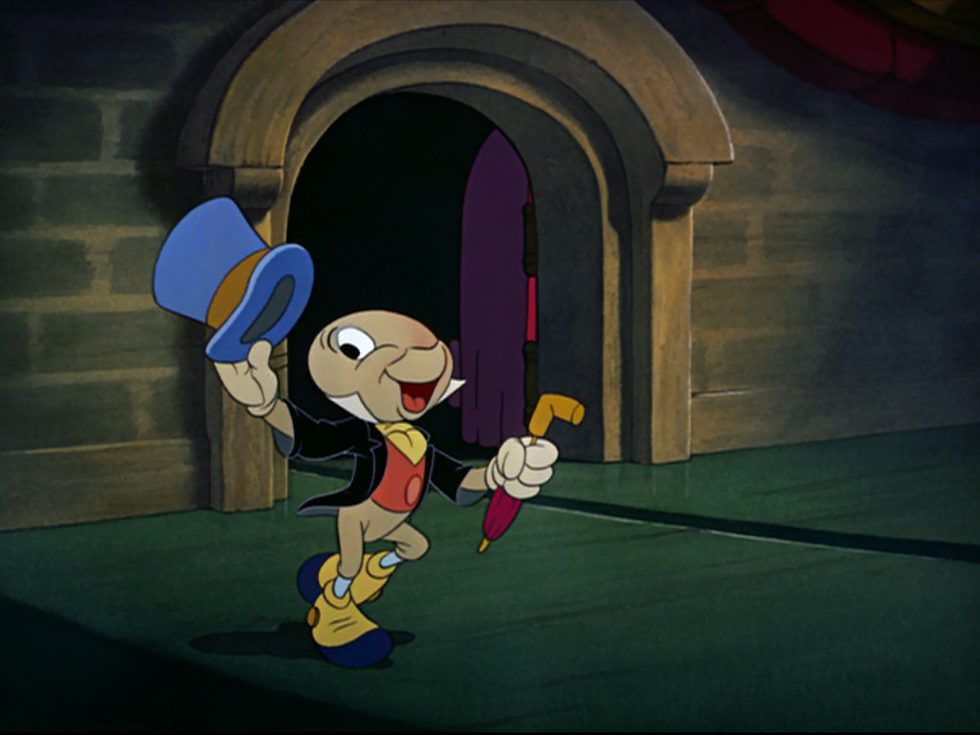
when you have big worries, when there’s that little Jiminy cricket on your shoulder
and in your ear saying:
‘What about the danger?’
‘This child was badly hurt and scared remember’
‘What about all the complicating factors making it more dangerous?’
‘What about the judge?’
*insert evil tone……
‘Don’t forget that will you, social worker?
‘The child might get hurt more if you stop focusing on the harm and danger’
‘Stay in the worries column or you’re risking the child, if the child is hurt this will be
your fault social worker’
When practitioners are in the middle column they’re often terrified they’ll overlook
something, forget something. Jiminy is whispering ‘don’t make a mistake, don’t get it wrong’ ‘The only way to get it right and reassure the judge that you’ve got it all
covered, is to be 100% clear, detailed and specific about the harm and danger’
Bloody Jiminy!!
To be clear. I’m not saying ignore Jiminy. Jiminy is an okay guy – as long as we are
clear with our boundaries with him! (love me a good boundary!) He is defs a helpful
little dude. And, he can be a pain in the butt if we let him take over. Let him take over and Jiminy is our worst fears, he is our anxious self, he is the judge, the DCS, the Director, the DG, the minister, the coroner, the media, the taxi driver. Always ready to tell us we failed, to warn us we will fail if we aren’t careful.
But, and this is critical, if we keep him in his place, he is so helpful to us.
Jiminy can keep us real, he can remind us why we are here, he can anchor us so we don’t fall into naïve and potentially dangerous practice. This is dangerous work, this is not a kindergarten picnic. Children get hurt. Its our job to work alongside their
naturally connected networks, to do everything we can to increase their safety.
I worked with a fab team and their regional director a few years ago, doing a debrief
about an injured infant case. The team were really keen to get my view on whether
they had done a ‘good job’ or if they had been naive. It was early days in their
journey with safety planning this way.
The Regional Director told me how great her team were doing, focused on building future safety based on existing safety. She (the regional director) told me her main role was to just keep reminding them ‘this baby was broken’ ‘remember the baby was broken’. She was their (very necessary) Jiminy. She kept them safe in their practice. Kept them grounded without them freezing up, helping them stay creative, energised as team able to access the best of their intelligence and compassion.
This Jiminy didn’t drive it, didn’t control it, didn’t do a hostile take-over of the case.
This Jiminy kept her place - on the shoulder, chipping in just where she was needed (broken babies is serious stuff). The RD demonstrated trust (not blind trust mind) in the team to think it through and act wisely. This was so helpful for the Team Leader and her social workers, they were able to stay in the middle column - existing safety, future safety, detailed, specific, evidenced, demonstrated over time.
I very much admired this version of Jiminy! #teamworkisdreamwork.
We all need that Jiminy. This is serious business. Especially with those darling
babes.
The takeaway message here is this:
Get in the middle column.
I’ll say it again. (with no filter this time) …….Get in the bloody middle column already would ya!
Focus on it. Take it seriously – no ‘feathers’ please and thank you!!
As Steve Edwards (co-creator of the Signs of Safety) would say “Are we having fun yet?”


Comments